
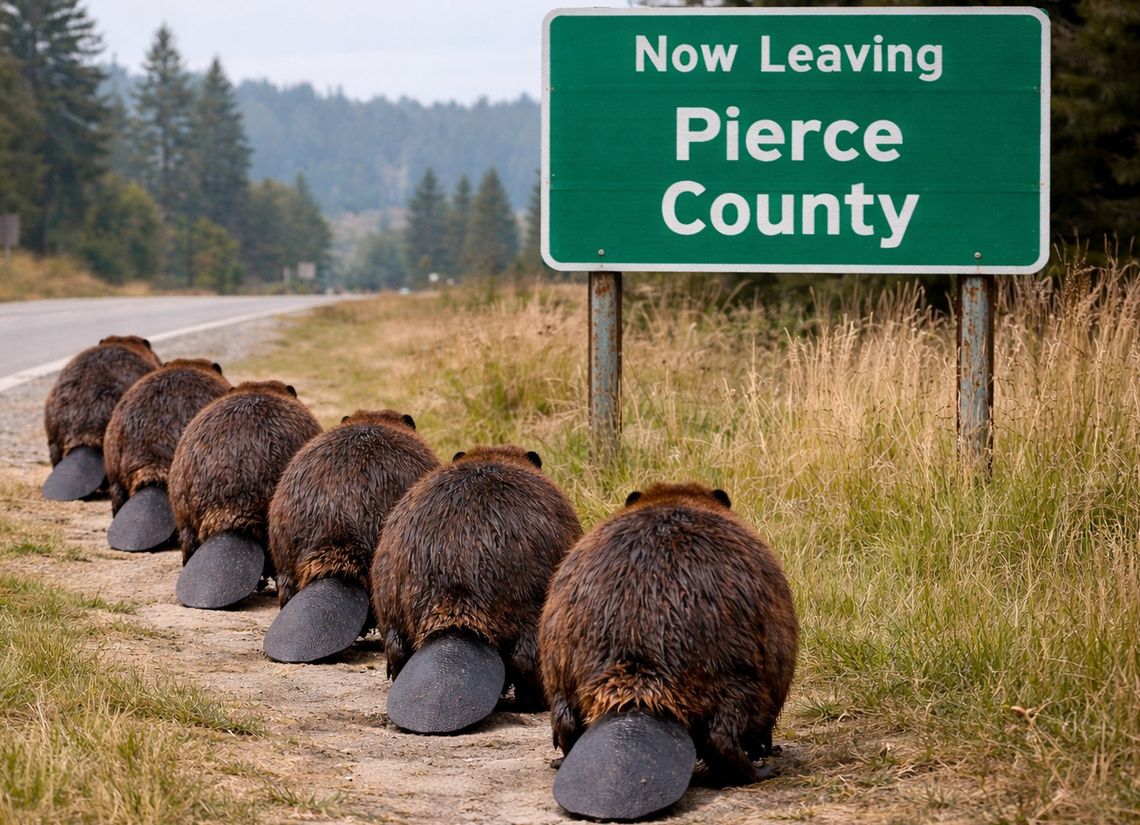
Hit the road Jack Beaver
Targeted trapping is actually saving $$
Pierce County’s beavers have been served with eviction notices and told to pack their bags and not come back.
Over the past year, Pierce County has implemented a targeted beaver trapping and stream restoration project aimed at reducing the population of the pesky critters locally and reducing the expensive damage they cause to county culverts and road ways.
Public Works Superintendent Bruce Carter gave a report on the beaver trapping program at the county commission’s regular meeting last Tuesday night.
Eyebrows were raised at last year’s budget work sessions at the $47,302 line item listed for beaver removal.
Carter points out however, the county’s proactive approach to managing beaver activity is paying off—both financially and environmentally. He says the targeted beaver trapping and stream restoration program prevented costly infrastructure damage, restored natural water flow and significantly reduced future risks to county roads and culverts.
While beavers are a natural part of the local ecosystem, the Pierce County Road Department has long been locked in a battle with the varmints.
The busy animals have been industrious at building dams throughout the county. The dams block culverts and drainage systems and have resulted in flooded roadways, washouts, damaged infrastructure and expensive emergency repairs. Historically, the county has faced repeated culvert failures caused by beaver activity.
“Rather than continuing a costly cycle of reaction and replacement, Pierce County invested in prevention,” Carter said.
In 2025, 67 high-risk sites were addressed through a coordinated trapping and mitigation effort at a total cost of $47,302. By comparison, replacing 67 culverts at those locations damaged by beavers would have cost an average of $6,484.65 per culvert, for a total of $434,471.88.
“Because of the trapping program, no culverts were damaged by beavers in 2025. This resulted in direct savings to Pierce County taxpayers of approximately $387,169.88 in just one year,” said Carter.
The county’s trapping contractor, Asiga Wildlife Extractors, provided more than animal removal. In addition to trapping beavers at problem sites, the contractor removed beaver dams and lodges, restoring natural stream channels and hydrological flow. This work reduced upstream flooding, protected road embankments, and helped repair damaged ecosystems. Restoring natural water flow protects infrastructure and improves overall stream health, something culvert replacement alone cannot achieve.
The program also delivered longterm benefits by reducing the local beaver population before damage could occur.
In 2025, 297 beavers were trapped, including 149 females. Female beavers typically produce an average of four kits per year. Removing these females prevented approximately 596 kits from being born. Combined with the beavers already removed, the program reduced the projected beaver population entering 2026 by approximately 893 animals. This population reduction will significantly lower the likelihood of future dam construction and repeated culvert blockages.
Simply replacing culverts does not address the underlying beaver problem.
In many cases, new or upgraded culverts are quickly blocked again, leading to repeated failures and escalating costs.
County road department employees have torn out beaver dams on Friday only to find them completely rebuilt by Monday.
“By addressing the root cause— both through population management and dam removal—Pierce County has broken that cycle,” Carter said.
“This program demonstrates that smart, proactive infrastructure management can save money, protect the environment and improve public safety. An investment of just over $47,000 eliminated beaver-related culvert damage in 2025, restored natural stream function at dozens of sites, and prevented hundreds of thousands of dollars in future repairs. Pierce County remains committed to responsible stewardship of both public funds and natural resources. The success of the 2025 beaver trapping and restoration program shows that prevention works—and it works well for our roads, our streams, and our residents,' said Carter.






Comments