Compassion often grows from personal hardship.
For Blackshear resident Alyssa Lauland, that hardship came through years spent supporting her daughter during numerous brain surgeries. Those experiences taught her the fear families carry through every procedure and every uncertain outcome.
They also shaped a promise she made more than a decade ago which would eventually offer hope to someone she has never met.
Mrs. Lauland and her family moved to Blackshear about a year ago, after her husband retired from the Air Force, drawn by the peacefulness of the community and good local schools for their children.
The Laulands are active at First Baptist Church and they enjoy being on the ballfields or volleyball courts with their kids.
“We just felt like God kept calling us here,” she said. “We have loved being a part of a place where no one knows a stranger. After living in places around military bases, it's amazing to be surrounded by people that truly love thy neighbor.”
Mrs. Lauland shows she is a good neighbor, too.
She first joined the DKMS donor registry in 2013 during a charity event in Arkansas for a local boy battling cancer.
DKMS stands for Deutsche Knochenmarkspenderdatei, which translates to the German Bone Marrow Donor Center.
In Arkansas that day as she stood among others who wanted to help, Mrs. Lauland felt called to register as a potential stem cell donor. At the time, she was a new mother who could not imagine facing a life-threatening illness without every possible source of hope.
Mrs. Lauland believed if her own child ever needed a stranger to step forward someone would answer that call.
More than a decade passed before that opportunity arrived.
Earlier this year, representatives from DKMS contacted Mrs. Lauland with remarkable news. Genetic testing had identified her as a potential stem cell match for a patient fighting for their life. There was no hesitation.
“Yes” came immediately. The decision reflected years of watching her own daughter endure multiple complex brain surgeries. Those difficult experiences gave Mrs. Lauland a firsthand understanding of the emotional burden carried by patients plus caregivers.
She knew another family was waiting for hope much like her own family had done so many times before.
“I just thought about what I would want someone to do if it were my child,” Lauland said.
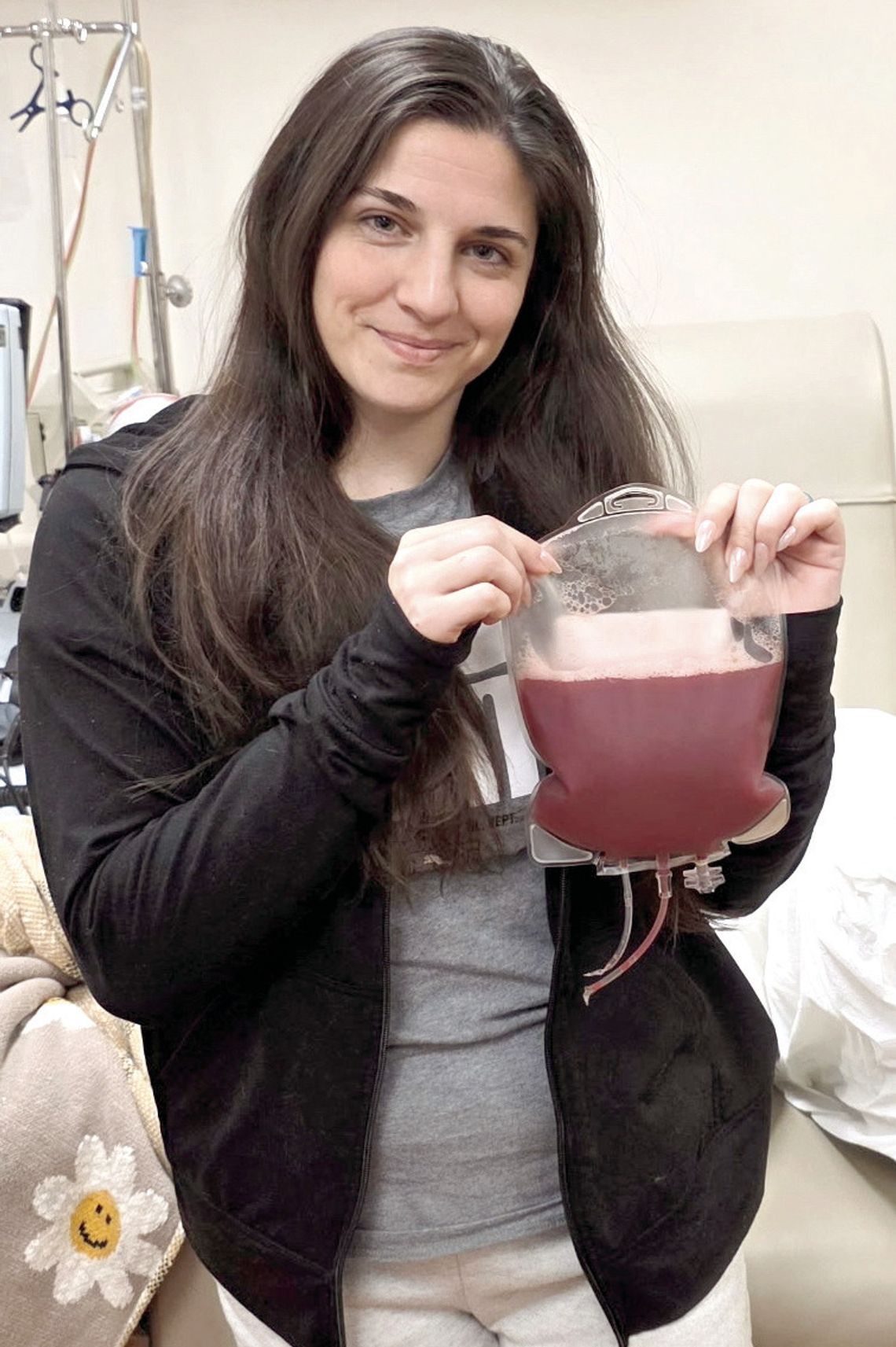
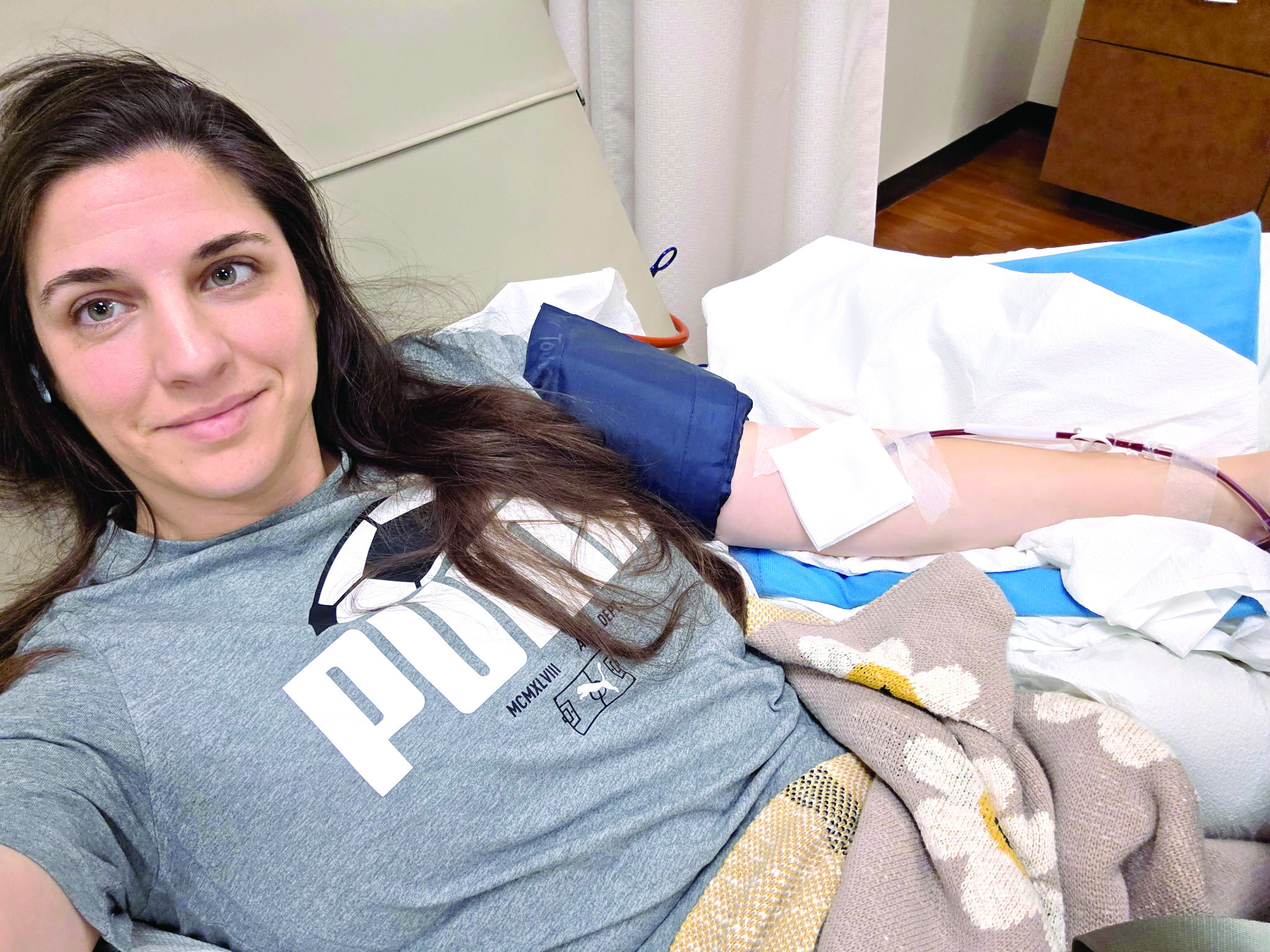
She completed the donation earlier this year through DKMS giving a stranger a chance at renewed health while offering comfort to loved ones whose future depended on the generosity of someone they would likely never meet.
“As humans and Christians we need to help each other plus fulfill the opportunities God presents to us in our lives” Lauland said.
Founded in Germany in 1991, DKMS, a non-profit organization, has grown into one of the world’s largest stem cell donor organizations. Its mission is to recruit volunteer donors for patients diagnosed with blood cancers or other lifethreatening blood disorders that can only be treated through a stem cell transplant.
The need remains significant.
Only about 30 percent of patients requiring a stem cell transplant find a compatible donor within their own family. The remaining 70% must depend upon an unrelated volunteer donor found through national or international registries.
Because tissue types are inherited, finding a compatible match can be extremely difficult. Some patients search for months while others never locate a suitable donor.
Many people mistakenly believe every stem cell donation involves surgery. Modern donations usually occur through a process called peripheral blood stem cell donation.
Donors receive medication for several days encouraging stem cells to move into the bloodstream. Blood is then collected through a machine which separates the stem cells before returning the remaining blood to the donor.
The procedure resembles a lengthy plasma donation. Only a small percentage of donations require bone marrow collection in a hospital setting.
For privacy reasons, DKMS keeps donor plus recipient identities confidential during the initial period following a transplant. Donors often know very little about the person receiving their cells beyond limited medical information.
Even without knowing who received her donation, Mrs. Lauland understands the impact it could have for an entire family.
“Even being one person in a remote location, you can do your part to care for others plus help save lives,” Lauland said.
Her story reflects more than a single act of generosity. It demonstrates how one decision made at a community charity event years earlier ultimately became a lifeline for someone facing their greatest challenge.
For Mrs. Lauland, the experience came full circle.
After years spent hoping others would help her daughter through each difficult chapter, she became the stranger another family had been praying would answer the call.


Comments