
The proposed business could bring millions of dollars to county coffers
A proposed new business investment by Grenergy USA involving Battery Energy Storage Systems (BESS) could potentially bring millions of tax dollars into Pierce County over the next 15 years.
Grenergy USA, the Alabama-based, U.S. branch of an energy solutions company from Spain, has identified Pierce County as the potential site for what would be the second of only two privately-owned BESS facilities in Georgia.
The BESS operation would be a 20 acre facility near Patterson and represent approximately $177.9 million of investment. Tax revenue on personal property associated with the project is projected to flow into Pierce County coffers by 2030.
While still in the early planning stages, the project has been in development on paper since December 2025, but no one is in a rush to the finish line.
Pierce County Industrial Development and Building Authority (IDBA) Executive Director Blake James says the methodical, step-by-step approach to the proposed energy storage facility is entirely deliberate. Given recent controversies surrounding other proposed and then postponed or canceled tech-oriented projects in the southeast, James wants each step of the way to be fully transparent and known to the public.
Most of all, James wants to make it very clear, this is not a data center, bitcoin mine or solar farm. In fact, a rep for Grenergy says the 20 acre site shows how much smaller the footprint of a BESS project is than that of a solar farm and it operates in an entirely different manner.
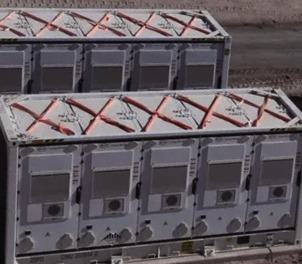
HVAC-cooled modular units such as those seen above would contain the lithium-ion batteries used by battery energy storage systems
BESS facilities purchase electricity during low demand time periods and then bank that energy, selling it back to the local utilities during high volume, high demand periods. In this way they generate a profit while also reinforcing and boosting the local power grid, ensuring there is plentiful energy during peak seasons when usage levels are at their highest.
Such reinforcement of the power grid could be useful not just during peak seasons like summer, when everyone wants to keep cool and air conditioners run almost constantly, but also during severe weather events. If downed lines disconnect a utility provider’s substation from the main power plant, BESS units can step in to temporarily supply energy to communities still connected to the substation.
Also, a BESS facility could make Pierce County and its potentially bolstered power grid more attractive to other industries looking to set up shop in the area.
Beyond the benefits of fortifying the local power grid, James and IDBA Board Chairman Steven Paul focused upon the net benefits to the county if the project is approved. Over the projected 15 year lifespan of the BESS site, an estimated $9,914,970 of tax revenue would be paid to the county.
In addition to the tax revenue, Grenergy is promising to deliver $20,000 in available scholarship funds for graduating Pierce County High School seniors each year and $15,000 in donations to the Pierce County Fire Department for the purchase of new equipment for 15 years.
From the IDBA’s perspective, it is a win-win scenario. In addition to the charitable funds going to PCHS graduates and the county fire department, the county itself would receive an infusion of tax revenue each year with no expenditure on their part in terms of material or manpower.
In the words of James, this particular project isn’t about job creation so much as it is generating tax revenue without any extra strain on local resources.
However, what might look like a slam dunk to the IDBA still has a long way to go in terms of paperwork before any money comes in.
Prior to any construction, a vital Memorandum of Understanding (MOU) between Pierce County and Grenergy is required, and that can only happen if a series of negotiations and procedural hurdles are successfully cleared.
The July 14 called meeting of the IDBA board ended with a passing vote on the motion to bring the proposed project before the tax assessor’s board.
James and Paul of the IDBA then presented the proposed tax abatement schedule to the tax assessor’s board during their meeting July 15, with Interim County Manager Sauls and County Chairman Neal Bennett also in attendance. The proposal was met with guarded interest.
Tax Assessor Board Chairman Carl Boyette said of the proposed abatement schedule, “There is no doubt they would be getting the gold standard here, because the company in question produced the abatement schedule themselves. To my eyes, the document and benefits are heavily front loaded in the company’s favor.”
Some present, including Boyette, were reassured to learn the batteries to be used in the BESS site would be the more stable and reliable lithium iron phosphate batteries. (See related sidebar.)
“There are two kinds of lithium and this is the better kind when it comes to fires,” said Boyette, who added he approved of the proposed donations to the fire department, “Because they will need to be trained to handle them.”
Assessor board member Larry Batten asked about potential contamination of water sources, not wanting to risk spoiling the purity of the Little Satilla River.
Retained by Grenergy USA to represent them at the meeting, Ian Evans of Stratum Land and Energy Partners was on hand to answer questions and help alleviate some concerns. In regard to Batten’s inquiry, Evans stated definitively there would be “no risk of water run off and no regular water usage” at the proposed facility. The only water on site would be a storm water retention pond such as any other new construction would require.
Notably, Evans stayed strictly on the topic of operational issues. Negotiations regarding the percentages of the tax breaks Grenergy is seeking was outside the matters he was authorized to discuss.
When asked by Boyette what other counties have projects like the one proposed for Pierce, Evans replied the only one he was aware of is in Baldwin County, saying he knew of no others and the Baldwin facility is similar in size and scale to what Grenergy would like to do here.
County concerns about things being promised and then not delivered were also addressed. If at least 87% of the proposed $177 million investment is not put into the new facility, the bond board would extract additional “penalty payments” from Grenergy.
Evans indicated Grenergy is quite serious about the project and dedicated to at least a 15 year commitment, “With something as investment heavy up front as this, no one speculatively builds something like this.”
Which is what makes a MOU so important and that can only happen if an agreement on the tax abatements is reached. After nearly two hours, many questions had been asked and answered, but it was obvious there was still a lot yet to be hammered out.
The search for a middle ground between the tax abatements Grenergy wants and what the tax assessors board and coiunty are willing to consider is still ongoing, but by the end of the meeting things seemed warmer and less guarded.
Boyette wrapped things up with a promise to provide a counter proposal with an alternate abatement schedule, in the near future, once he and the other members had a chance to fully review Grenergy’s numbers more in depth.
“We’ll go back and tell them we received some very positive feedback, but would like to see the percentages adjusted, so that slope (of abatements) isn’t quite so steep,” said Paul.
James seemed optimistic and upbeat as the long meeting came to a close, “I think this is a good fit for Pierce County, if we can make the particulars work, and I believe we can,” he said.
“We’ll get a list compiled of what we’d like to see in the MOU,” Boyette replied. “We need money—just don’t give away the farm.”







Comments