
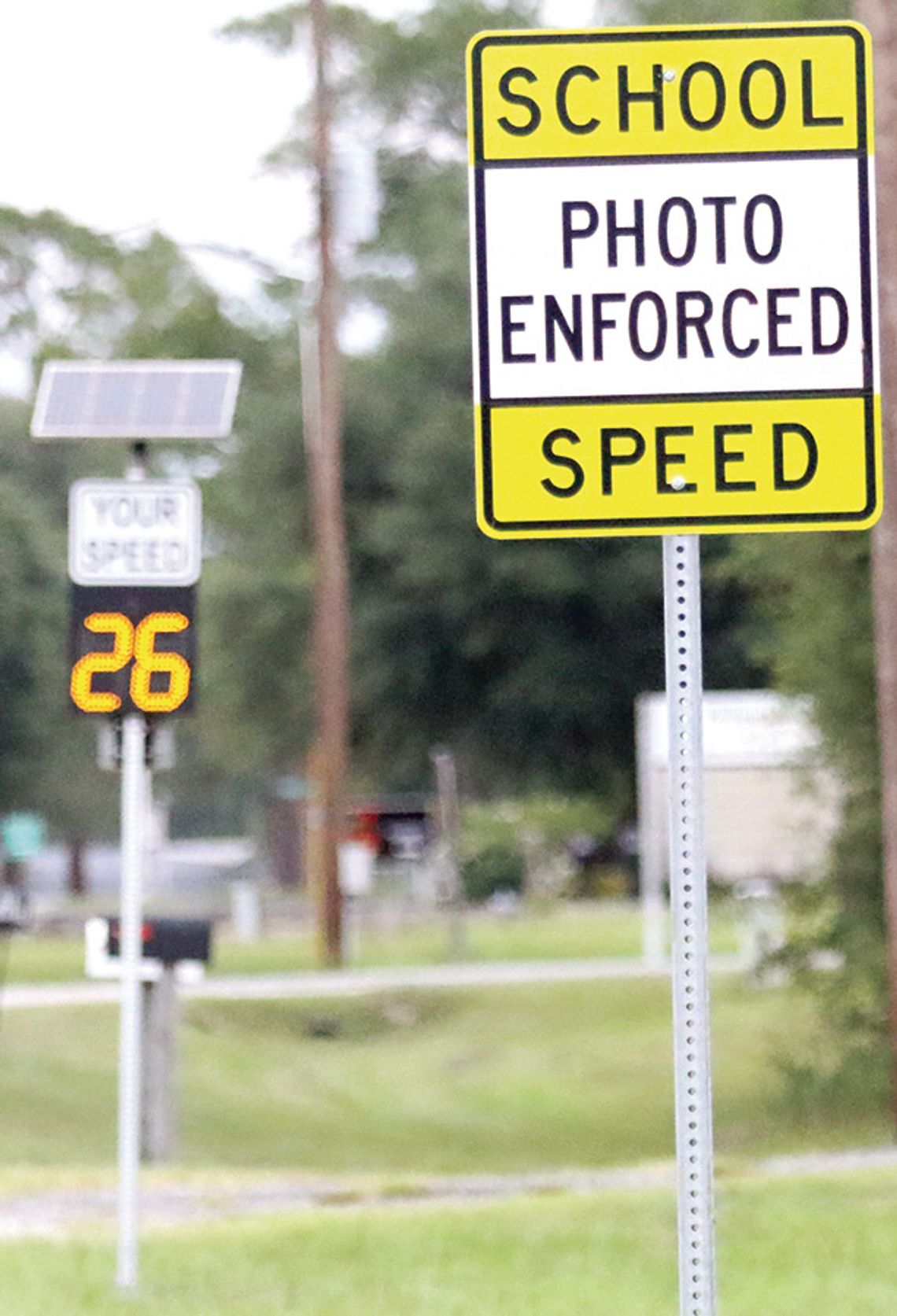
HOBOKEN — Drivers entering and leaving the City of Hoboken along Kelly Street/Raybon Road West will soon notice a change in the speed limit.
Previously, as motorists entered and left the city limits around the City of Hoboken Cemetary and Hoboken Elementary School, yellow flashing lights warned of the school zone speed limit of 25 miles per hour.
The lights flashed from 7:20 a.m.-8:20 a.m. (before school) and again from 2:20 p.m.-3:20 p.m. (after school) until the end of the school year.
According to Hoboken Police Chief Sammy Hendrix, a change in the law (Georgia House Bill 651) mandates the flashing lights will run continuously from 7:20 a.m.-3:20 p.m., beginning when school starts Tuesday, August 4 and when school ends Wednesday, May 26.
“That area (Kelly Street) is a normal 30 mph zone except when the lights are flashing and goes down to 25 mph,” Chief Hendrix told council members during the July 7 City of Hoboken council meeting. “Now, in order for us to write tickets, the lights have to be flashing the duration of the school day (eight hours). We’ve got to change the (speed limit) sign to alert motorists of entering the zoned area.
“When school is out for holidays (Thanksgiving, Christmas, Spring Break), no citations will be issued.”
The Blue Line Solutions contracted with the Brantley County School System two years ago to install near schools to capture drivers exceeding limits. In many jurisdictions, they are programmed to flash and ticket drivers traveling at least 10 mph over the posted speed limit.
They operate during designated school beacon hours (typically mornings and afternoons) and are usually inactive on weekends, holidays, and summer breaks.
HB 651 strengthens oversight by requiring clearer warning signs, regular accuracy testing of cameras, and more detailed citation notices to drivers. It also creates a formal complaint process, allowing the state to investigate misuse and issue fines or revoke a city’s permit if cameras are used improperly.
Second, the bill tightens how citations are issued and enforced. Violations must still be more than 10 mph over the speed limit, citations must be sent within specific timelines, and drivers are given clear instructions on how to contest them. It also removes the ability to add extra late fees or additional penalties beyond what is authorized in law.
Third, it places new limits on how revenue can be used. Funds collected from these citations must go toward public safety or law enforcement initiatives and cannot be used broadly, such as for general personnel costs.
“All the revenue generated through the school zone system now has to be reported to the state,” state Hendrix. “We didn’t have to do that in the past.”




Comments