
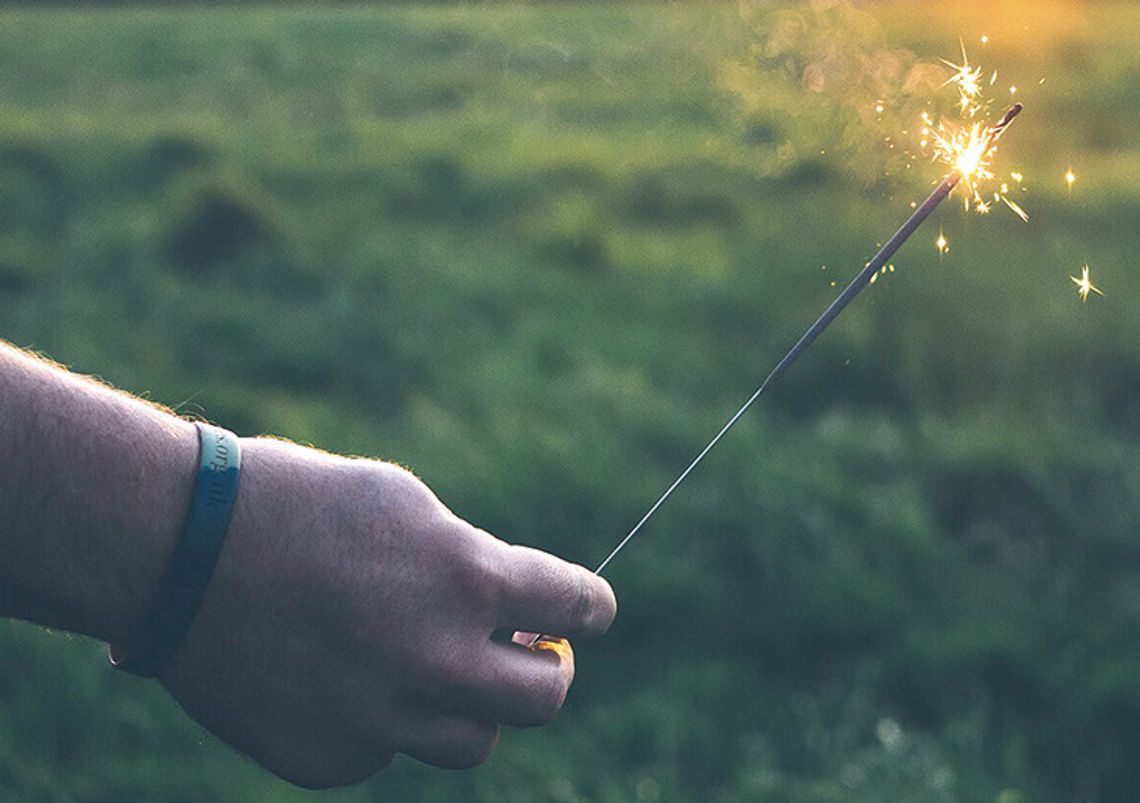
While the Fourth of July is a time of celebration, it’s also a time of increased danger and risk of injury.
That may come in the form of drunk drivers who’ve celebrated a little too hard, or perhaps from fireworks mishaps.
There is, however, another seemingly unassuming, source of danger connected to celebrating July 4: sparklers.
Yes, sparklers, that seemingly simple piece of pyrotechnics viewed safe for children to enjoy, can easily scald the skin as they often burn at up to between 1,800 and 2,000 degrees Farenheit.
Caitlyn Walsh, Trauma Program Manager at Memorial Satilla Health, cautioned parents when letting children celebrate with them.
“I don’t think people really understand the dangers of them, because they’re just cute, fun little things the kids hang on to and play with,” she said last week. “And just because the spark is gone, doesn’t mean the heat is gone.”
Walsh cited examples of children discarding stillhot sparklers on the ground, only to step on them later with bare feet. She said there also have been instances of children playing tag with sparklers.
“Burns are a common injury with sparklers,” she said.
Of course, fireworks pose just as much of a threat of injury as well. Walsh said she’s regularly seen the results of instances of people holding onto lit fireworks or bottle rockets, as well as failing to get far enough away from them.
“Fireworks? You can about count on it evey single year, Fourth of July, this time of year,” she said, “people having fun, celebrating probably a little more than they should!”
There are countless “home remedies” for burn treatments one hears about, whether that be applying ice, butter or even toothpaste to the wound. Walsh discouraged these as not only unhelpful, but potentially harmful.
“They really don’t do anything, and then you’re adding these products onto an open wound, potentially, so it can actually cause more harm than good,” she said. “Like, ice and stuff, you’re just decreasing blood supply to the area.”
She encouraged rinsing the area with cool running water, before keeping the area clean and dry while seeking official medical treatment.
The emergency unit at Memorial Satilla Health, 1900 Tebeau Street, is a Level IV trauma center.


Comments