
Southern cattlemen warned to be on the lookout for parasitic fly
American farmers are facing an old foe, one previously banished for decades — the New World screwworm fly.
This parasitic fly was once a scourge to Southern farmers for decades, until eradication efforts in the 1950s and 1960s successfully exterminated the species, at least in the United States. These efforts consisted of breeding sterile male flies, and introducing them into the population, interfering in the breeding cycle of females, as female screw worm flies only breed once in their brief lifespan.
However, reports of screw worm infections spreading north through Mexico were reported in 2024. Now, 12 cases of screwworm infection have been reported, 11 in Texas and one in New Mexico.
Despite the new cases being largely relegated to areas near the southern U.S. border, media outlets are already speculating about the possible impact this coud have in beef prices.
In response to this outbreak, the federal government has begun putting quarantine zones in place and preparing sterile flies since February.
The threat a new screwworm outbreak poses to the cattle industry has prompted a response, not just from the federal government, but from state governments as well.
Colorado and Louisiana have both recently put restrictions on animals entering the state, as has Georgia.
In a statement from Georgia Agriculture Commissioner Tyler Harper, the state is taking measures to prevent any cases spreading into Georgia, namely “enhanced interstate movement requirements for warm-blooded animals”.
These requirements include equine, livestock, and companion animals, specifically for animals entering Georgia from Texas. For animals coming to Georgia from confirmed screwworm sites, they must follow the NWS (New World Screwworm) Movement Guide, obtain a Georgia entry permit, and request said permit at least 48 hours before entering Georgia.
For animals coming from outside an infested zone in a confirmed state or county, they must obtain a certificate of veterinary inspection. This must be issued with seven days of travel, and they must be found free of New World screwworm.
Symptoms of screwworm infection include:
• White maggots in wounds of living animals
• Clear or blood-tinted discharge from a wound
• Discomfort and headshaking
• A wound that refuses to heal, growing as maggots feed
• Decreased appetite
• Separation from the herd Gordon Cole “GC” Ganas of Cole ANGUSBeef in Waycross gave his insight on the issue.
“Local farmers at present have no immediate concern if managing a closed herd,” Ganas said. “Those that purchase animals at market should be very diligent in knowing the animal’s history and source. Close physical inspection should be completed to detect any potential signs of any wounds.”
Ganas was reassuring about the risk to local markets.
“It’s not likely animals purchased in our regional markets will have any animals that originated from Texas or further West,” he said.
He also emphasized the local role in managing the pest.
“Local markets will become involved in managing this to control further expansion,” added Ganas. “What to do with animals discovered will most likely be elimination in some controlled manner.”
Ganas concluded, in regards to screwworm, Georgian farmers have, “No need to panic at this currently.”
Dr. Hank Wheeler of Satilla Animal Hospital emphasized the importance of cleanliness and good hygiene in pets.
“Livestock owners should have a good fly control program in place in order to prevent the spread of many diseases including the screwworm,” he said. He also encouraged regular checking for open sores and wounds, and disinfecting any found.
“If maggots are present then I would recommend the animal be examined by a veterinarian,” Dr. Wheeler added.
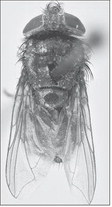
The New World screwworm fly is causing concerns in the beef industry. SPECIAL PHOTO








Comments