
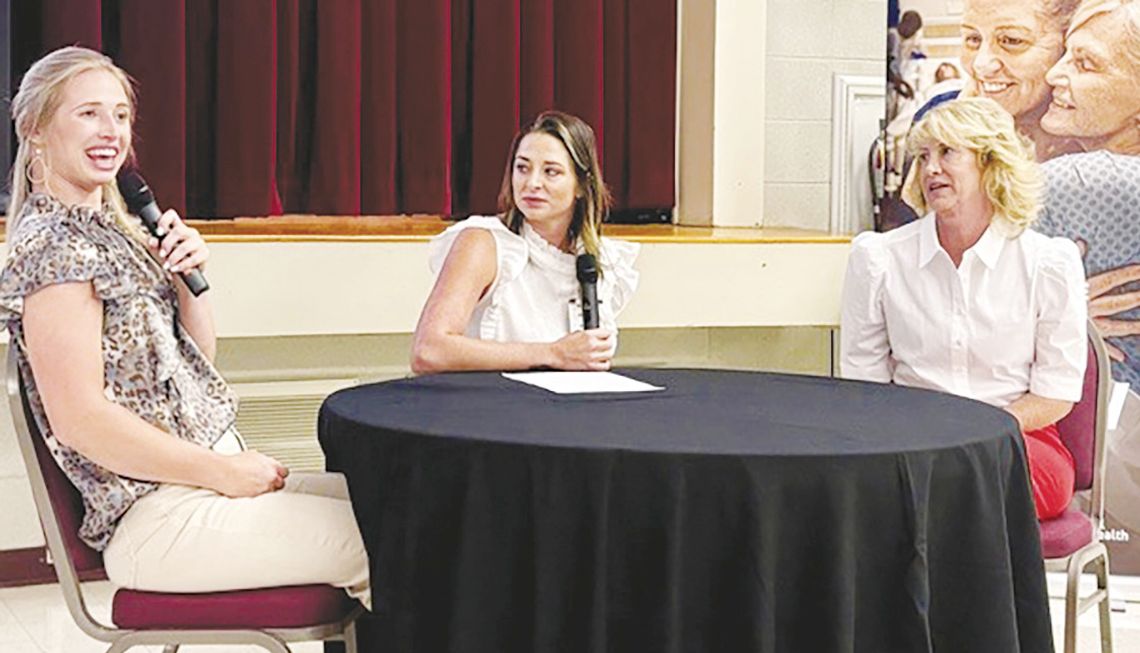
Thomas, Shuman were guest speakers at first Trauma Survivors Reunion
WAYCROSS — “Keep Moving Forward.”
Brantley County resident Jacee Thomas, guest speaker who survived a May 24, 2016 train accident near her home on Prescott Road as a teenager, gave those words of encouragement to those gathered for the first-ever Trauma Survivors Reunion sponsored by Memorial Satilla Health.
Standing alongside her mother, Beth Ann Thomas, Jacee offered perspective from both a survivor’s journey and the long road of recovery that follows trauma.
“It was an honor to speak at this event, and I believe part of my purpose is to inspire others to keep moving forward, remain resilient, and never stop fighting, even during the hardest moments of recovery,” she said.
Beth Ann Thomas also shared the emotional reality many caregivers face, reminding families in attendance that healing extends beyond the patient and often demands extraordinary patience, strength and endurance from loved ones.
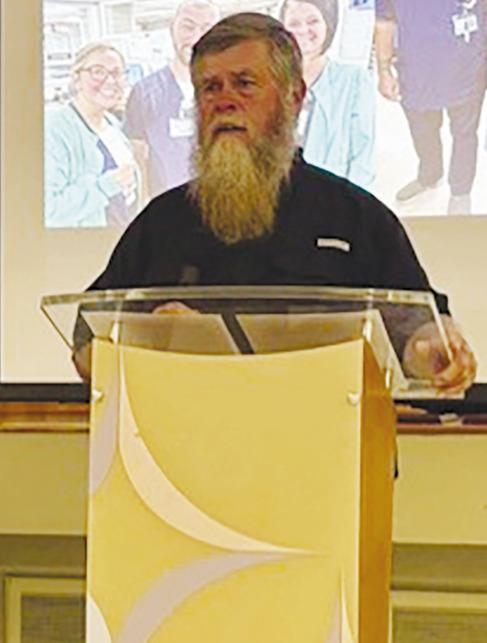
Hoboken resident Joey Shuman was also guest speaker at the reunion. He gave words of encouragement to those present.
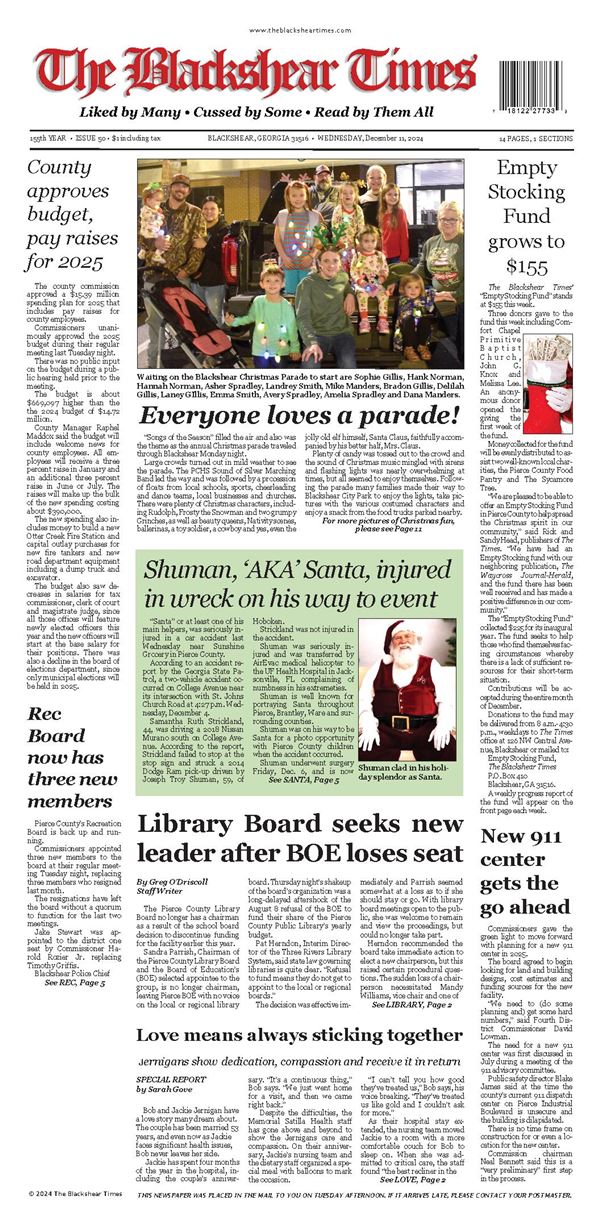
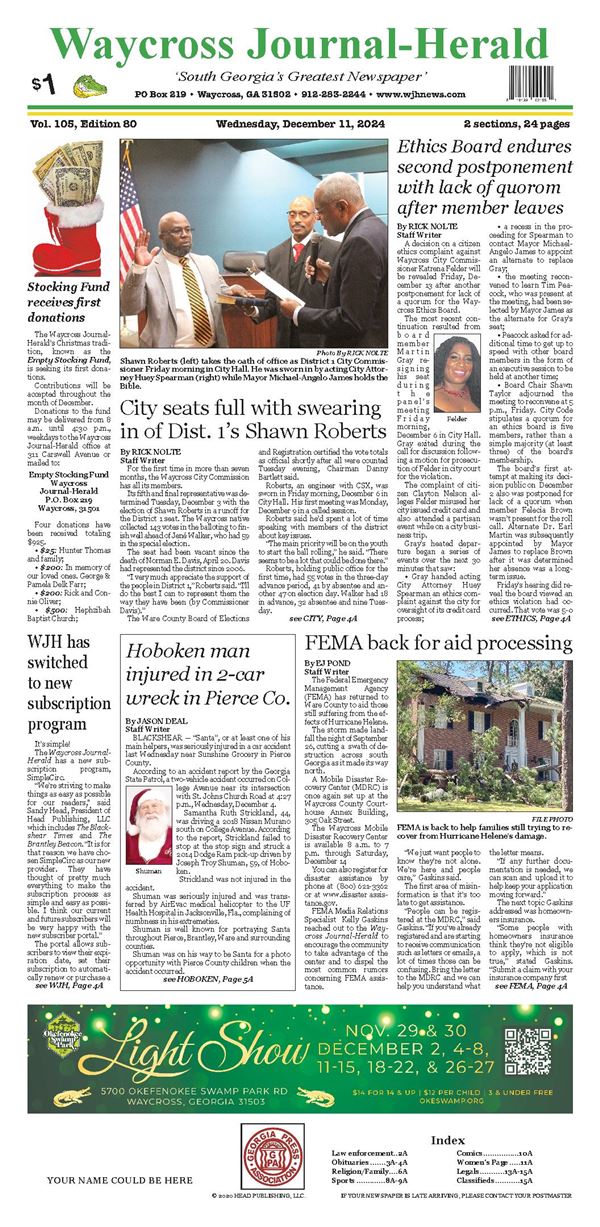
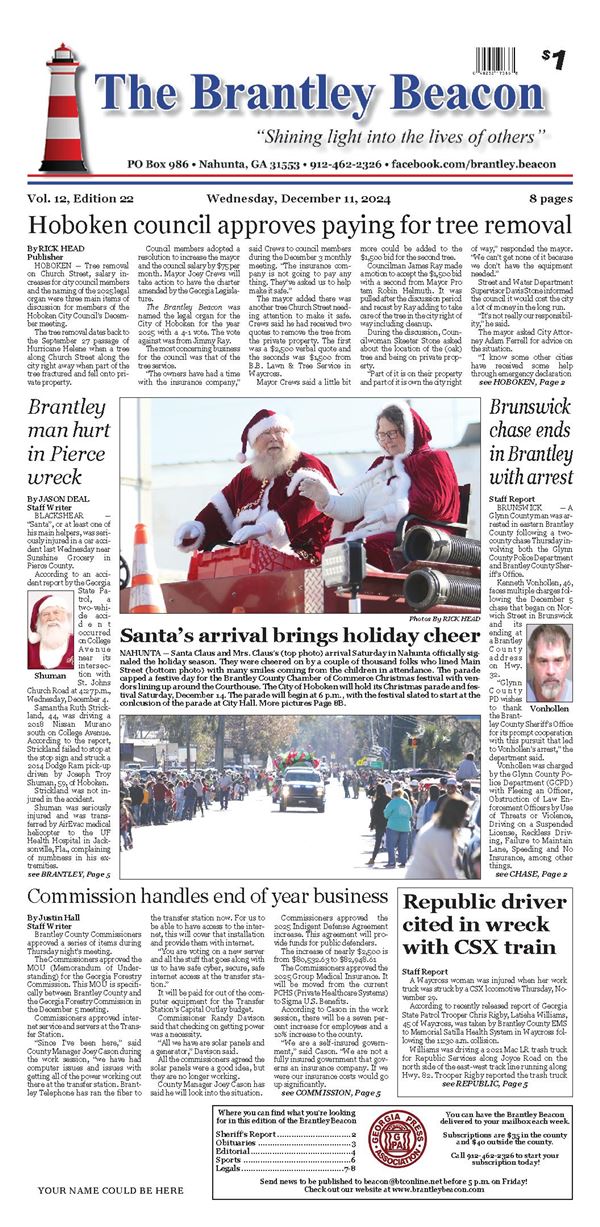
Shuman was on his way to “help out” Santa at a December 10, 2024 Christmas Party at Midway Elementary in 2024 when his truck was struck by another vehicle on College Avenue near its intersection with St. Johns Church Road. Shuman suffered injuries that left him paralyzed for a time.
Thankfully, Shuman is recovering from his injuries. The trauma survivors reunion was an opportunity to show off his progress and encourage others who are still in the process of recovery.
Shuman shared his story of perseverance and healing with attendees. Now walking, Shuman spoke candidly about the role faith, family support and determination played in his recovery journey.
“My message to patients and families is simple — don’t give up,” Shuman said. “Family support is instrumental, and I’m incredibly grateful for my community, my faith, and especially my wife for helping me through recovery. Work as hard as you can in physical therapy, even when progress feels slow.
“Sometimes recovery means taking two steps forward and one step back, but you have to keep pushing forward. I’ve learned to be thankful for what I can do and not dwell on what I can’t. I feel truly blessed.”
Shuman’s experience is typical for trauma survivors. Healing often begins in chaos — flashing lights, emergency rooms and uncertain outcomes. For many, healing continues in quieter moments of recovery, resilience and reflection.
At Memorial Satilla Health, those journeys came full circle during the hospital’s first-ever Trauma Survivor Reunion, an event designed to reconnect survivors, families, physicians, nurses, EMS personnel and hospital staff whose lives intersected during moments of crisis.
Held during Trauma Awareness Month, the reunion offered something rarely seen in emergency medicine — an opportunity for caregivers to witness what comes after survival.
Several survivors, each injured in severe accidents, returned to Memorial Satilla, not as patients in critical condition, but as living reminders of resilience and recovery. Their injuries ranged from traumatic brain bleeds to spinal cord trauma, injuries that, at one point, carried devastating odds.
For Trauma Program Manager Caitlyn Walsh, the event represented far more than a ceremonial gathering. It served as a reminder of why trauma teams dedicate themselves to the often unseen and emotionally demanding work of emergency medicine.
“This event was especially meaningful because I’ve been personally involved in the care and recovery journeys of some of the survivors recognized,” Walsh said. “It was incredibly rewarding to see the progress they’ve made and to witness the impact of the dedication, teamwork and effort our trauma staff invest every day to improve outcomes for patients.”
Walsh, who orchestrated the reunion, said the event created a rare opportunity for healthcare professionals to reconnect with patients whose stories they often only know through the most difficult moments of their lives.
In trauma care, providers frequently witness fear, uncertainty and life-threatening injuries, but seldom have the chance to see the recovery that follows.
That reality was visible throughout the event as survivors embraced nurses, reunited with emergency responders, and thanked the medical teams who helped guide them through unimaginable circumstances.
Among those honored was Michael Stokes, who traveled nearly four hours to reunite with the care team who treated him after a traumatic ATV accident. During the ceremony, Stokes embraced hospital staff and reconnected with first responders.
“Personally, this event meant a great deal to me because it reminded me that surviving wasn’t something I did alone,” Stokes said. “There were so many people involved, from the people who saw the aftermath and called for help, to the first responders on scene, to the trauma team that cared for me afterward. The reunion gave me the opportunity to express my gratitude directly to the people who were there on one of the worst days of my life and thank them for giving me a second chance.”
Other survivors recognized included Ware County natives Eli Bennett and Gradon Bowen, whose recoveries from traumatic injuries underscored the life-changing impact of emergency and rehabilitative care.
Each survivor received a commemorative plaque while members of their care teams stood to be recognized, drawing applause from attendees gathered to celebrate not only survival, but perseverance.
The reunion came during a significant period for Memorial Satilla Health, which recently received designation as a Level IV Trauma Center by the Georgia Department of Public Health. The recognition marks expanded trauma capabilities for a region long considered underserved in emergency trauma access.
“This designation is a major advancement for our community,” Walsh said. “Previously, there were no trauma centers within an 83-mile radius, meaning many patients had limited access to immediate trauma care.
“Having a Level IV Trauma Center locally allows residents to receive timely, lifesaving care closer to home during critical moments.”
Still, while medical milestones and certifications matter, the reunion highlighted something more personal — the relationships formed during life’s most fragile moments.
For survivors, it was a chance to return not as patients, but as proof that recovery is possible. For caregivers, it was an opportunity to witness lives reclaimed.
And for everyone gathered, it served as a reminder that trauma care does not end when a patient leaves the hospital; healing continues in reunion, gratitude, and hope.


Comments