
Go to main contentsGo to search barGo to main menu
Tuesday, May 12, 2026 at 11:54 PM

Chiefs say work has come a long way to 90% contained

Chiefs say work has come a long way to 90% contained
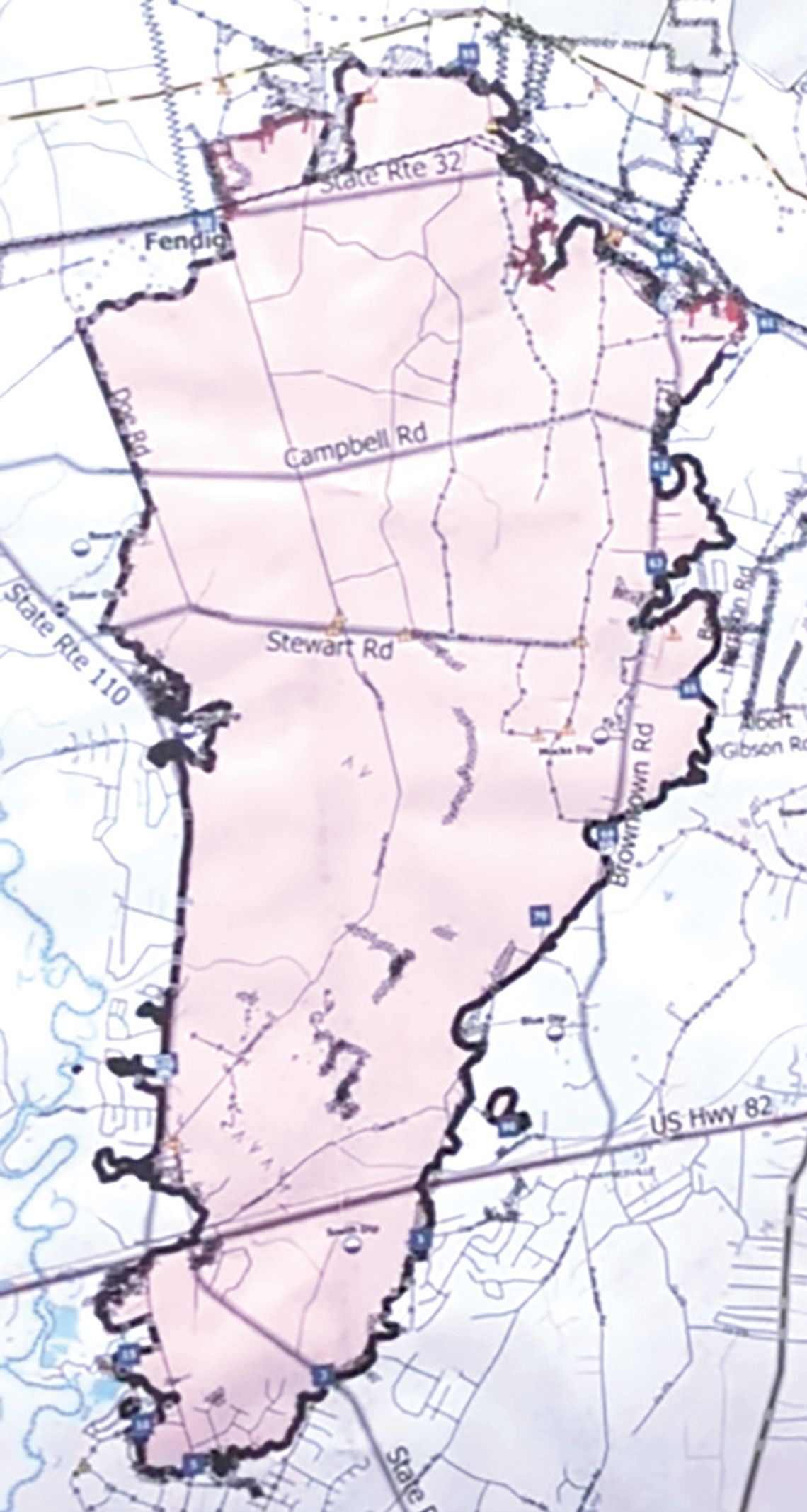
Map shows containment lines (black) around the Hwy. 82 fire with a few northern areas still indicating hot, smolder spots in the bays. SPECIAL PHOTO

LULATON — “We’ve come a long ways from day one ... we’re in a lot better place than we were when we started this.”

It was an agreement between Shane Hardee and Lance Robinson, Operations Section Chiefs with Southern Area Complex Incident Management Team 1 Thursday, May 7 before turning the operations back over to the Georgia Forestry Commission.

The fight has been helped by rain Saturday, May 2 and again Friday night, May 8 into Saturday, May 9.

The two chiefs have coordinated efforts to help the Hwy. 82 Brantley County fire to 90 percent containment covering 22,420 acres since its Monday, April 21 explosion into a raging wildfire.

Hardee has provided morning updates of the daily agenda items in a multi-agency quest to bring the fire, which burned nearly 35 square miles in eastern Brantley County, under control.

Hardee said there are still pockets of smoke inside the perimeter from deep-rooted vegetation.

“There is no threat of escape, because it’s so deep in the interior (bays),” said Hardee. “But, it’s going to continue to put up smoke until we get enough rain to put those organics out. We have mopped up very far from the primary containment features, so we’re feeling really good about the the future.

“We’ve done a lot of work around the structures and stuff on Browntown Road to try to keep the citizenry safe in those homes while making sure there’s no hazard trees. We’ll do one more pass through today in doing that to make sure we haven’t missed anything.

“There are still some areas with significant heat. We’ve got over 22,000 acres of landscape here, and it’s scattered heat throughout its interior. We’ll have some folks in there continuing to work on that.”

Hardee said the general plan moving forward is mopping up and continuing to widen contingency lines.

“We want to leave the residents with a few key things as we leave,” said Robinson. “The fire is not out ... the bays will continue to have heat.”

Hardee warned in a couple of weeks, if the weather stays dry, pine needles are going to fall, and there is potential of re-burn which may actually climb up and get into the crowns of some of the bays. He also offered safety advice for the years to come.

“Take this time for the coming days, months and years to really create that defensible space in and around your houses,” said Hardee. “It gives us the best chance for success when it comes to helping defend homes when the need arises.

“Also, if you have gable ends on a home, make sure you have screens on the inside of them. I’ve seen more houses burned from the top down as those embers go in that gable end than probably any other thing in my career.”

During the Friday, May 8 update, Marcus Beasley of the Field Operations for the Georgia Forestry Commission Type 3 Incident Management Team which took over command Thursday night (May 7), stated the agenda was to do some rehab and road work.

“You’re going to start seeing in the West division and East Division, a lot of tractor plow units freshening up lines,” said Beasley, explaining the fire has been shrunk to three divisions including a North during the Friday, May 8 update. “We don’t want a re-burn creeping across a line and getting out. We’re trying to right-size this thing (fire) and trying to focus more on freshening the lines up and some mop up. We’ve got a lot of heat in the northwest corner in that bay of vegetation.”

Firefighters will keep fixing damage caused by the firefighting work at affected homes. This includes preventing erosion, removing dangerous debris, and shoring up damaged areas to prevent further damage, keep people safe, and make it safer for residents to get in and out.

The temporary flight restriction over the fire area remains in effect as firefighters will continue to use Unmanned Aerial Systems (UAS) with infrared technology to assist ground crews in identifying hot spots.

During the Saturday, May 8 update, Beasley said the overnight rain helped, but an area around Fendig Road was still of concern with hot spots.

“It’s burning real deep in organic material,” he said. “It’s a dangerous place to put firefighters in to long-term exposure.”


Share
Rate

View e-Editions
Blackshear Times
Waycross Journal Herald
Brantley Beacon
Support Community Businesses!
Robbie Roberson Ford
Woodard Pools
Hart Jewelers
David Whitehead, MD
Dr. Robert Fowler
Don't Stay Silent!
Now Hiring